
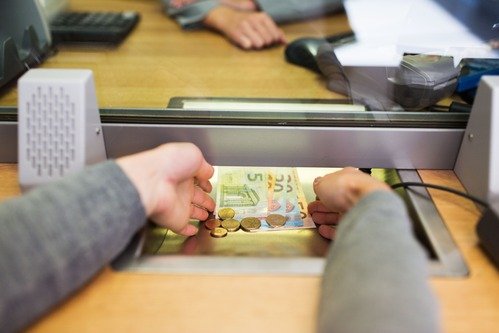
In many customer service environments, safety is a top priority, and a well-designed workstation is an essential part of daily operations. Although large security systems may seem to play the most important role, in reality smaller components — such as the transaction drawer or transaction tray — are crucial for protecting both employees and customers. These seemingly simple mechanisms enable the safe exchange of documents, cash, or other items while maintaining full control over the transaction process.
What is a transaction drawer and what functions does it serve?
A transaction drawer is a specialized structural element used where contactless exchange of items is required. It may take the form of a sliding module or a rotating mechanism. It allows the transfer of documents, money, or cards without direct physical contact between the client and the employee. It is particularly important in banks, fuel stations, payment points, and public service offices.
What distinguishes modern transaction trays?
A modern transaction tray, also referred to as a transaction tray in some contexts, is designed for convenience and safety. Its construction allows precise and smooth operation, while additional reinforcements ensure durability during heavy use. Depending on the model, the tray may be integrated with protective glazing or installed as a separate module within the counter.
Where are transaction drawers and transaction trays used?
Modern cashier and reception workstations are designed with maximum ergonomics and safety in mind. For this reason, both the transaction drawer and the transaction tray are widely used in:
- banking and financial facilities,
- toll booths and ticket offices,
- hospital and medical facility receptions,
- currency exchange points,
- fuel stations,
- facilities requiring staff protection from external threats.
Their universal application stems from their ability to provide quick, safe, and convenient item transfer regardless of the type of service environment.
How do transaction drawers work?
The mechanism of a transaction drawer is based on sliding or rotating movement that ensures full separation between the two sides of the station. The employee maintains complete control over opening and closing the drawer, minimizing the risk of unauthorized access. In enhanced-resistance models, additional security features — such as thick walls or reinforced rails — are used.
Benefits of using transaction drawers and transaction trays
In many facilities, these transfer systems are essential components of customer service stations because they offer:
- increased employee safety,
- reduced risk of robbery or theft,
- the ability to exchange items without physical contact,
- durability and resistance to heavy use,
- convenient operation for both the client and the employee.
Thanks to these characteristics, the transaction tray and transaction drawer are just as important as anti-burglary doors or protective glazing, and their role in security systems is significant.
How transfer solutions affect service quality
Despite their small size, these components influence not only safety but also user comfort. A well-designed transaction tray ensures smooth item handover, preventing delays or handling difficulties. In high-traffic environments, this translates into faster service and increased customer satisfaction.
Modern materials and ergonomics
Today’s solutions are produced from durable materials that guarantee long service life, easy maintenance, and an aesthetic appearance. Installation can be tailored to the workstation’s style, making the transaction tray an integral part of the overall structure. This is especially important in representative facilities, where both functionality and visual appeal matter.
A small component with a crucial role in safety
Although the transaction drawer or transaction tray takes up little space, its role is significant. These components are essential elements of cashier stations, supporting employee safety and ensuring professional customer service. They are solutions perfectly suited to the needs of modern facilities, where safety and functionality must go hand in hand.